 KSOEM
KSOEM

Articles
- Page Path
- HOME > Ann Occup Environ Med > Volume 38; 2026 > Article
- Original Article Work-life balance and effort-reward imbalance, and their interaction, associated with presenteeism among Korean wage workers: Based on 6th Korean working conditions survey
-
Sang-Hyeon Kim
 , Eun-Chul Jang, Soon-Chan Kwon, In-ho Lee, Jisuk Yun, Ui Chan Jung, Young-Sun Min*
 -
Annals of Occupational and Environmental Medicine 2026;38:e1.
DOI: https://doi.org/10.35371/aoem.2026.38.e1
Published online: January 8, 2026
Department of Occupational and Environmental Medicine, Soonchunhyang University Cheonan Hospital, Cheonan, Korea
- *Correspondence author: Young-Sun Min Department of Occupational and Environmental Medicine, Soonchunhyang University Cheonan Hospital, 31 Suncheonhyang 6-gil, Dongnam-gu, Cheonan 31151, Korea E-mail: mys0303@gmail.com
• Received: October 27, 2025 • Revised: December 12, 2025 • Accepted: December 15, 2025
© 2026 Korean Society of Occupational & Environmental Medicine
This is an Open Access article distributed under the terms of the Creative Commons Attribution Non-Commercial License (https://creativecommons.org/licenses/by-nc/4.0/) which permits unrestricted non-commercial use, distribution, and reproduction in any medium, provided the original work is properly cited.
- 3,649 Views
- 203 Download
- 1 Crossref


Abstract
-
Background This study investigated the relationship between work-life balance (WLB), effort-reward imbalance (ERI), and presenteeism among Korean wageworkers through two models used simultaneously.
-
Methods Data from the 6th Korean Working Conditions Survey for 28,669 Korean workers, including 13,513 men and 15,156 women, were analyzed. All analyses were performed with pre-designed weight. Multiple logistic regression analysis was used to analyze the association between WLB, ERI, and presenteeism among Korean workers. The participants were classified into the following four groups: group 1, status of both WLB and ERI is “balanced”; group 2, WLB and ERI status are “imbalanced” and “balanced”, respectively; group 3, WLB and ERI status are “balanced” and “imbalanced”, respectively; group 4: status of both WLB and ERI is “imbalanced.”
-
Results We found that WLB and ERI were associated with presenteeism in both men and women. Depending on their WLB and ERI status, women generally had a higher tendency of presenteeism than men. Multiple logistic regression shows that, in most models and groups, there is an increased odds ratio (OR) for presenteeism in both men and women compared to the reference value. Moreover, the OR in both men and women gradually increased in groups 2, 3, and 4 compared with group 1. When considering both WLB and ERI status simultaneously, ERI had a greater impact on presenteeism than WLB. Furthermore, it was found that a synergistic effect of presenteeism manifests when both WLB and ERI are in a state of imbalance simultaneously.
-
Conclusions Using the two models simultaneously, we found an association between WLB, ERI, and presenteeism according to sex with a synergistic effect among Korean workers. Our research suggests that active interventions targeting WLB and ERI are necessary to reduce presenteeism, which ultimately leads to decreased productivity.
BACKGROUND
Presenteeism is a phenomenon in which you go to work but do not properly demonstrate your ability due to physical and mental health problems, and productivity decreases.1 The reason why presenteeism is important is that it ultimately reduces productivity.2 The phenomenon of presenteeism is highly prevalent within Korean corporate culture, and numerous studies have indicated that it constitutes a significant issue in terms of indirect costs and its impact on colleagues.3 Economic losses from presenteeism in the United States are estimated to amount to $15 billion a year,4 and studies have shown that costs associated with productivity losses from presenteeism are 18%–60% higher than direct medical costs.5 These studies highlight the importance of managing presenteeism. Therefore, accurately measuring and predicting presenteeism is crucial for fostering a healthy organizational culture, ensuring sustainability, and promoting national productivity and economic strength.
A similar concept is absenteeism, which differs from presenteeism in that it involves actual absence from work.1 Absenteeism from work when sick has been studied extensively, as it also incurs significant costs to businesses. However, unlike absenteeism, the decline in labor productivity caused by presenteeism is difficult to estimate accurately because it is not revealed directly.4 In addition, it is difficult to accurately measure and predict the factors that cause presenteeism.
Presenteeism is related to a number of different factors. Several studies have shown that employment insecurity is associated with the prevalence of presenteeism.6 Moreover, hierarchical structures within an organization and a vertical, rigid organizational atmosphere or social climate can cause presenteeism.7 In addition, psychosocial factors, such as job insecurity, emotional labor, interpersonal relationships, and job stress, are related to presenteeism.8 High stress also negatively impacts presenteeism.9 Studies conducted in Korea investigated the relationship between stress and presenteeism.10 Research has also been conducted on the association of work-life balance (WLB) and effort-reward imbalance (ERI) on presenteeism in China and Australia, respectively.11,12
WLB can be defined as the “accomplishment of role-related expectations negotiated and shared between an individual and his/her role-related partners in the work and family domains.”13 Recently, a shift has emerged among the younger generation in South Korea, with WLB being prioritized over workplace performance or rewards, unlike in the past. Consequently, there is growing interest in the impact of WLB on individuals and organizations.14 As such, interest in WLB and the effects of WLB is increasing, but studies investigating the relationship between WLB and presenteeism are relatively insufficient.
ERI represents a “high cost/low gain” condition in the workplace.15 ERI provides an estimate of the job stress experienced by each employee based on the effort invested in work and the resulting rewards.16 Siegrist conceptualized a healthy work environment as a balance between employee effort and perceived reward.17 Previous studies reported that there is a high correlation between ERI and various mental and physical symptoms18 and that workers who work in disproportionate effort-reward conditions experience stress.19 Employees perceive working conditions involving high effort and low reward as the most stressful, and this imbalance is related to presenteeism.20
Many previous studies suggest association between WLB and ERI. A 2025 study of emergency room nurses reported that ERI influences physical and mental symptoms, with work-family conflict playing a significant mediating role in this relationship.21 Another study revealed that ERI and work-life conflict jointly influence various workplace outcomes, including job burnout, job satisfaction, and workplace performance.22 Additionally, there was research suggesting the possibility of interaction between WLB and ERI on depressed mood.23
As described above, although the WLB and ERI are known to affect worker presenteeism, no study has considered both models simultaneously. Based on these findings, this study examined the association of WLB and ERI with presenteeism, which reduces productivity, among Korean wageworkers.
METHODS
The Korea Institute of Occupational Safety and Health conducted the 6th Korean Working Conditions Survey (KWCS) from 2020 to 2021. The KWCS is a large-scale national survey conducted since 2006 to investigate occupational and environmental risk factors and provide preliminary data to improve working conditions.24 A total of 153 people under the age of 20 were excluded, and due to the nature of presenteeism, 12,701 self-employed people without employees, 3,167 self-employed people with employees, and 1,601 unpaid family workers were excluded.25 A total of 4,247 workers with missing data or incomplete responses were excluded. Finally, 28,669 wageworkers were included in the study (Fig. 1). When pre-designed weights were applied to represent all workers at the national level, the total study participants were 33,095.
In this study, presenteeism was used as the dependent variable, and WLB status and ERI status were used as the independent variables to determine their association with presenteeism. The covariates were constructed based on factors related to these variables. The definitions of the variables are as follows.
Presenteeism was evaluated using the question “Over the past 12 months (or since you started your job) did you work when you were sick?” The responses to this question were categorized as “yes,” “no,” and “I wasn’t sick.” If the answer was yes, it indicated presenteeism, and the remaining answers did not indicate presenteeism.
The WLB status was determined using the question “In general, how do your working hours fit in with your family or social commitments outside work?” Respondents answered “very well,” “well,” “not very well,” “not at all well,” and “don't know/no opinion.” In this study, the answers “very well” and “well” were considered balanced WLB states, and the answers “not very well” and “not at all well” were considered imbalanced WLB states.23
The ERI status was determined using the question “Considering all my efforts and achievements in my job, I feel I get paid appropriately.” Respondents answered “strongly agree,” “tend to agree,” “neither agree nor disagree,” “tend to disagree,” and “strongly disagree.” In this study, respondents who answered “strongly agree,” “tend to agree,” and “neither agree nor disagree” were considered to be in a balanced ERI state, and those who answered “tend to disagree” and “strongly disagree” were considered to be in an imbalanced ERI state.23
Using the two variables defined above (WLB and ERI), the participants were divided into four groups: group 1, status of both WLB and ERI is "balanced”; group 2, WLB and ERI status are “imbalanced” and “balanced,” respectively; group 3, WLB and ERI status are “balanced” and “imbalanced,” respectively; group 4, status of both WLB and ERI is “imbalanced.” In this study, the analysis was performed with reference to the “balanced” status of both WLB and ERI for predictors of presenteeism. Furthermore, we additionally investigated the interaction effect on presenteeism when both WLB and ERI were imbalanced.
In this study, covariates included the general and occupational characteristics of the study participants. The commonly used characteristics were age and self-rated health status. Occupational characteristics included education level, income level, occupational type, company size, employment status, shiftwork, night work, long working days, stress from work, and working hours.26-31 Age was divided into four groups: 20–39, 40–49, 50–59, and ≥60 years. Based on their responses, self-rated health status was classified as good or bad. Based on the responses to academic achievement, education level was categorized into middle school or below, high school, and above college. The monthly income was divided into four groups: <1, 1–2, 2–3, and ≥3 million Korean Won (KRW). In this study, occupations were classified into five groups based on their characteristics using the Korean Standard Classification of Occupations (KSCO) provided by the 6th KWCS: management/professional group (managers, experts, technicians, and semi-specialists), white-collar group, service/sales group, blue-collar group (agriculture/forestry workers and machinery operators/assembly workers) and laborers. Based on the number of workers, the company was divided into three groups: <50, 50–300, and ≥300 workers. Employment status was categorized into regular workers, temporary workers, and day laborers. Based on the definitions of variables, night work is defined as working at least 2 hours between 10 PM and 5 AM, while shift work is defined as yes or no depending on the presence of various forms of shift work. Based on their responses, the number of long working days per month was categorized into 0 days, 1–10 days, and 11 days or more and working hours per week were classified into more than 40 hours and less than 40 hours. Because working days per month and working hours per week can affect workers through distinct mechanisms, we defined them as separate exposure variables. Based on their responses, job stress was classified as yes or no.
In this study, the χ2 test was used to determine the level of presenteeism according to the general and occupational characteristics of the participants. The distribution of the WLB and ERI states according to presenteeism was also described. Multiple logistic regression analysis was performed to verify the association between groups 1–4 and presenteeism, and we provided an odds ratio (OR) and a 95% confidence interval (CI). In addition, we conducted stratified analysis according to sex. Various studies have consistently demonstrated differences in occupational characteristics and preferences between men and women.32,33 Furthermore, based on research indicating sex disparities in job stress and differences in presenteeism,34,35 we performed a stratified analysis. Finally, we examined the interaction effect on presenteeism when both WLB and ERI states were simultaneously imbalanced. The following regression equation was used in the analysis: Logit (Presenteeism) = β0 + β1WLB + β2ERI + β3(WLB × ERI) + covariates. The β3 coefficient obtained from this equation was used to assess the effect size and statistical significance of the multiplicative interaction. To evaluate the additive interaction, the relative excess risk due to interaction (RERI) was calculated based on the previously estimated β coefficients using the formula: RERI = exp(β₁ + β₂ + β₃) − exp(β₁) − exp(β₂) + 1. The RERI represents the excess relative risk attributable to the interaction between two exposures on an additive scale, where RERI > 0 indicates a positive and RERI < 0 a negative interaction; a value significantly different from zero suggests that the combined effect differs from the sum of their individual effect. The 95% CI for the RERI was derived using the delta method.
The number of participants, proportion (%), and p-values were presented using weighted data, and all analyses were performed using weighted data. All statistical analyses were performed using R software version 4.2.2 (R Foundation for Statistical Computing, Vienna, Austria). A p-value < 0.05 was considered indicative of statistical significance.
This study was approved by the Institutional Review Board (IRB No. SCHCA 2023-08-037) at Soonchunhyang University Hospital in Cheonan. The requirement for informed consent was waived due to the retrospective nature of the study.
RESULTS
Table 1 shows the distribution of the general and occupational characteristics of the participants according to WLB and ERI. Table 1 shows that all variables, except for WLB status by age, demonstrated a statistically significant relationship. In addition, the distribution of the general and occupational characteristics of the participants according to the presenteeism by sex is presented in Supplementary Table 1. Supplementary Table 1 shows the distribution of each group of WLB and ERI status according to presenteeism. It is noteworthy that both men and women exhibited statistically significant levels of presenteeism in the imbalanced groups for both WLB and ERI. Furthermore, among respondents with an imbalanced WLB status, 16.7% of men and 20.4% of women reported experiencing presenteeism. Regarding ERI, among respondents with an imbalanced ERI status, 12.6% of men and 16.2% of women reported experiencing presenteeism.
Table 2 shows the tendency of presenteeism when considering both WLB and ERI status simultaneously in men and women. A statistically significant association was observed in the prevalence of presenteeism for both sexes when WLB and ERI status were considered concurrently, with the highest prevalence rate occurring when both WLB and ERI were imbalanced. The results of multiple logistic regression analysis of presenteeism according to the “balanced” or “imbalanced” status of WLB and ERI, respectively by sex are presented in Table 3. In the men group, the odds of presenteeism in the “imbalanced” status of WLB is statistically significantly higher than in the “balanced” status of WLB, at model 2 (OR: 1.41; 95% CI: 1.15–1.72). From the ERI perspective, the odds of presenteeism in the “imbalanced” status of ERI is statistically significantly higher than in the “balanced” status of ERI, at model 2 (OR: 1.72; 95% CI: 1.45–2.04). In the women group, the odds of presenteeism in the “imbalanced” status of WLB is statistically significantly higher than in the “balanced” status of WLB, at model 2 (OR: 1.28; 95% CI: 1.07–1.54). From the ERI perspective, the odds of presenteeism in the “imbalanced” status of ERI is statistically significantly higher than in the "balanced" status of ERI, at model 2 (OR: 1.66; 95% CI: 1.43–1.93).
The results of multiple logistic regression analysis of presenteeism considering both WLB and ERI status are as follows (Table 4).
For the “imbalanced” WLB and “balanced” ERI status, the OR for presenteeism at crude, model 1 and model 2 levels are 1.42 (1.01–1.99), 1.32 (0.93–1.86), and 1.00 (0.71–1.43) for men, and 1.53 (1.14–2.06), 1.37 (1.00–1.87), and 1.01 (0.73–1.41) for women, respectively.
For the “balanced” WLB and “imbalanced” ERI status, the OR for presenteeism at crude, model 1 and model 2 levels are 1.65 (1.36–2.01), 1.56 (1.29–1.90), and 1.55 (1.28–1.90) for men, and 1.67 (1.42–1.98), 1.60 (1.35–1.89), and 1.57 (1.32–1.86) for women, respectively.
For the “imbalanced” WLB and “imbalanced” ERI status, the OR for presenteeism at crude, model 1 and model 2 levels are 3.85 (3.07–4.83), 3.16 (2.52–3.97), and 2.27 (1.77–2.90) for men, and 3.26 (2.66–4.00), 2.88 (2.34–3.55), and 2.15 (1.71–2.69) for women, respectively.
Table 5 shows the interaction effect on presenteeism when WLB and ERI are simultaneously imbalanced. For both men and women, a statistically significant positive additive interaction was observed between WLB and ERI in relation to presenteeism. Regarding the multiplicative interaction, it was statistically significant in the positive direction for men in both the crude and model 1 analyses. In model 2, while not statistically significant, it showed a marginally significant association (p = 0.07). To facilitate interpretation of the multiplicative interaction, the estimated odds ratios for the WLB × ERI interaction term are additionally presented in Supplementary Table 2.
DISCUSSION
In this study, both the WLB and ERI models are associated with presenteeism, respectively. When considering ERI and WLB simultaneously, we also found that imbalanced ERI has a greater impact on presenteeism than imbalanced WLB. Additionally, when ERI and WLB were simultaneously imbalanced, presenteeism further increased by interaction effect. Specifically, the RERI value exceeded 0 in all models, indicating the presence of a positive additive interaction between ERI and WLB.
Both ERI and WLB assess the balanced distribution of limited resources, and if they are not balanced, they act as stressors for workers.23 However, the difference between WLB and ERI is that ERI is limited to work situations, while WLB reflects stress outside work situations, especially at home.36
In this study, when ERI and WLB were imbalanced at the same time, presenteeism further increased. Previous studies have shown that several workplace stressors affect health when coexisting.37 In another study, ERI was found to further increase workers' mental fatigue when present in conjunction with other work-stress models.38 There are also studies that influence worker depression with interaction when ERI and WLB work at the same time.23 When such various stressors are accumulated in the workplace, it acts as a greater burden on workers. Those previous studies support the interaction effect of this study.
The results of this study are also related to the job stress theory and presenteeism. In general, job stress can be said to encompass the concepts of work-life imbalance and effort-reward imbalance. In a previous study, job stressors such as high job demands and lack of rewards were associated with presenteeism.31 Another study reported that the percentage of presenteeism was 10.2% among employees with high stress and 5.0% among employees with low stress.9 In a Korean study, stress was reported to be a factor affecting presenteeism.10
Allostatic load refers to body wear that accumulates when an individual is exposed to repetitive or chronic stress.39 The imbalance between WLB and ERI falls under the allostatic load and acts as a chronic stressor.26 This stress causes health problems, poor work performance, and presenteeism. In that sense, it could be evidence when developing strategies to improve labor productivity and reduce sick work by analyzing and improving stressors based on research on presenteeism caused by various workplace stressors, including this study.
From a sex-based perspective, when WLB and ERI are each in an imbalanced state, or when both are simultaneously in an imbalanced state, presenteeism was more prevalent among women than men. The first reason is that women juggle their dedication at work with their commitment at home. Previous studies have shown the double burden of work and family on working women.40,41 A Whitehall II study in the UK reported that low home control predicted coronary heart disease in women, but not in men.42 The second reason is due to gender role stereotypes in Korea. Previous Japanese studies have shown that women are more physically and emotionally burdened by what happens at home due to traditional gender role stereotypes, even though they belong to dual-income families, so they experience more work-family conflicts than men.43 This trend may have contributed to increasing presenteeism among women. The third reason is that women are more likely than men to experience job insecurity and poorer working conditions. They are also more likely to experience psychosocial work environments, such as low social support and high emotional demands. The effects of these factors manifest more readily in women as presenteeism.44,45
This study found that, when both variables were considered simultaneously, ERI had a greater impact on presenteeism than WLB. One plausible explanation we are considering is that the 6th KWCS, which serves as the foundational data for this study, was conducted during the coronavirus disease 2019 (COVID-19) pandemic period (between October 2020 and April 2021). Previous studies have shown that working from home can have a positive impact on WLB.46 The increase in telecommuting due to the COVID-19 pandemic has improved life satisfaction in Korean workers.47 From an ERI perspective, studies indicate that ERI arising from excessive dedication or increased workload in certain occupations, such as healthcare workers or solid waste workers, is negatively associated with mental health.48,49 Consequently, we believe that ERI had a greater impact on presenteeism than WLB in these aspects. This further highlights the need for systematic research to examine the effects of the unprecedented impact of the COVID-19 pandemic on the occupational environment.
This study has several limitations. The main limitation of this study is that the 6th KWCS is a large-scale, national study based on a standardized questionnaire. This means that the range of definitions typically associated with the terminology used may not be fully covered. The questions used to define WLB in this study are somewhat limited in scope for assessing WLB, which is defined in various ways. Similarly, the definition of ERI used in this study also struggles to evaluate the multiple facets of effort and reward comprehensively (such as financial compensation, career prospects, social recognition, and job security).
Second, because of the cross-sectional nature of this study, WLB and ERI were found to be significantly related to presenteeism, but a causal relationship could not be confirmed.
Third, shift work status and night work, as well as long working days per month and working hours per week, were defined as independent risk factors for workers based on their potential individual effects. However, as the variables within each pair are closely related, adjusted models may not be entirely free from overadjustment, even though no multicollinearity was detected in the descriptive statistical analyses we conducted.
Fourth, the estimates of ERI, WLB, and presenteeism were self-reported, which may have led to information bias. Fifth, it is possible that only workers working at the time of the investigation were included in the 6th KWCS; therefore, workers who took a leave or were hospitalized for treatment due to presenteeism may have been excluded.
Despite these limitations, this study has several strengths. First, the KWCS is the most comprehensive nationally representative survey of workers' health and working conditions in Korea and can be considered reliable. Second, this research is based on the 6th KWCS, which has a dual nature as both a disadvantage and an advantage because it was conducted during the unprecedented period of the COVID-19 pandemic. This study captures the unique phase in which working patterns shifted from workplace-centric to home-based arrangements, making it necessary to consider the particularities of its findings. From a social science perspective, these research outcomes have significant potential applications for subsequent studies. Third, this is the first study to analyze the relationship between presenteeism, WLB, and ERI among Korean wageworkers. There are many previous studies on the association of WLB with presenteeism and of ERI with presenteeism, respectively,11,12,29,44,45,50 but there are no studies that have investigated the effects of both WLB and ERI on presenteeism simultaneously.
CONCLUSIONS
In this study, WLB and ERI were found to be significantly related to presenteeism among Korean wageworkers. Given the impact of presenteeism on labor productivity and workers' health, the importance of proper WLB and proper rewards for effort should be emphasized.
Abbreviations
CI
confidence interval
COVID-19
coronavirus disease 2019
ERI
effort-reward imbalance
KSCO
Korean Standard Classification of Occupations
KWCS
Korean Working Conditions Survey
OR
odds ratio
RERI
relative excess risk due to interaction
WLB
work-life balance
-
Funding
This work was supported by the Soonchunhyang University Research Fund.
-
Competing interests
Young-Sun Min, a contributing editor of the Annals of Occupational and Environmental Medicine, was not involved in the editorial evaluation or decision to publish this article. All remaining authors have declared no conflicts of interest.
-
Author contributions
Conceptualization: Kim SH, Min YS. Data curation: Kim SH, Jang EC, Kwon SC, Min YS, Lee IH, Yun J, Jung UC. Formal analysis: Kim SH, Jang EC, Kwon SC, Min YS, Lee IH, Yun J. Investigation: Kim SH, Min YS, Lee IH, Yun J, Jung UC. Writing - original draft: Kim SH, Yun J. Writing - review & editing: Min YS.
-
Acknowledgments
I would like to thank my co-residents for their companionship and support during a challenging period.
NOTES
SUPPLEMENTARY MATERIAL
Supplementary Table 1.
General and occupational characteristics of the participants according to presenteeism by sex.
Supplementary Table 2.
Statistical significance of interaction term between WLB and ERI.
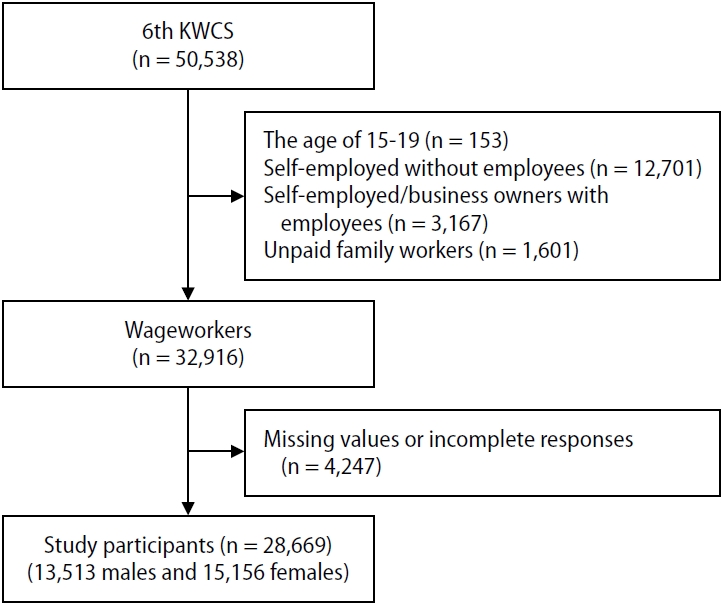
Table 1.
General and occupational characteristics of the participants according to WLB and ERI
| Variable | WLB | ERI | ||||||
|---|---|---|---|---|---|---|---|---|
| Totala | Balance | Imbalance | p-valueb | Totala | Balance | Imbalance | p-valueb | |
| Sex | 33,095 | <0.001 | 33,095 | <0.001 | ||||
| Men | 18,810 | 15,476 (82.3) | 3,334 (17.7) | 18,810 | 9,310 (49.5) | 9,500 (50.5) | ||
| Women | 14,285 | 12,252 (85.8) | 2,033 (14.2) | 14,285 | 6,792 (47.5) | 7,493 (52.5) | ||
| Age (years) | 0.066 | <0.001 | ||||||
| 20–39 | 4,221 | 3,523 (83.5) | 698 (16.5) | 4,221 | 1,806 (42.8) | 2,415 (57.2) | ||
| 40–49 | 7,361 | 6,148 (83.5) | 1,213 (16.5) | 7,361 | 3,626 (49.3) | 3,735 (50.7) | ||
| 50–59 | 8,321 | 7,033 (84.5) | 1,288 (15.5) | 8,321 | 4,185 (50.3) | 4,136 (49.7) | ||
| ≥60 | 13,192 | 11,024 (83.6) | 2,168 (16.4) | 13,192 | 6,485 (49.2) | 6,707 (50.8) | ||
| Self-rated health status | <0.001 | <0.001 | ||||||
| Bad | 32,006 | 27,025 (84.4) | 4,981 (15.6) | 32,006 | 15,809 (49.4) | 16,197 (50.6) | ||
| Good | 1,089 | 703 (64.5) | 386 (35.5) | 1,089 | 293 (26.9) | 796 (73.1) | ||
| Education | <0.001 | <0.001 | ||||||
| Middle school or below | 19,874 | 16,967 (85.4) | 2,907 (14.6) | 19,874 | 10,524 (53.0) | 9,350 (47.0) | ||
| High school | 10,755 | 8,743 (81.3) | 2,012 (18.7) | 10,755 | 4,664 (43.4) | 6,091 (56.6) | ||
| College or above | 2,467 | 2,019 (81.8) | 448 (18.2) | 2,467 | 916 (37.1) | 1,551 (62.9) | ||
| Income (10,000/month) | <0.001 | <0.001 | ||||||
| <100 | 13,387 | 11,273 (84.2) | 2,114 (15.8) | 13,388 | 7,819 (58.4) | 5,569 (41.6) | ||
| 100–199 | 10,835 | 8,745 (80.7) | 2,090 (19.3) | 10,834 | 4,825 (44.5) | 6,009 (55.5) | ||
| 200–299 | 6,635 | 5,640 (85.0) | 995 (15.0) | 6,635 | 2,504 (37.7) | 4,131 (62.3) | ||
| ≥300 | 2,238 | 2,070 (92.5) | 168 (7.5) | 2,238 | 954 (42.6) | 1,284 (57.4) | ||
| Occupational type | <0.001 | <0.001 | ||||||
| Management/professional | 4,890 | 3,913 (80.0) | 977 (20.0) | 4,890 | 1,907 (39.0) | 2,983 (61.0) | ||
| White collar | 3,725 | 2,946 (79.1) | 779 (20.9) | 3,725 | 1,523 (40.9) | 2,202 (59.1) | ||
| Service/sales | 5,759 | 4,685 (81.4) | 1,074 (18.6) | 5,758 | 2,680 (46.5) | 3,078 (53.5) | ||
| Blue collar | 7,546 | 6,627 (87.8) | 919 (12.2) | 7,546 | 4,101 (54.3) | 3,445 (45.7) | ||
| Laborer | 11,175 | 9,557 (85.5) | 1,618 (14.5) | 11,175 | 5,893 (52.7) | 5,282 (47.3) | ||
| Company size | <0.001 | <0.001 | ||||||
| <50 | 3,617 | 3,139 (86.8) | 478 (13.2) | 3,617 | 2,279 (63.0) | 1,338 (37.0) | ||
| 50–299 | 6,916 | 5,816 (84.1) | 1,100 (15.9) | 6,916 | 3,500 (50.6) | 3,416 (49.4) | ||
| ≥300 | 22,562 | 18,773 (83.2) | 3,789 (16.8) | 22,562 | 10,323 (45.8) | 12,239 (54.2) | ||
| Employment status | <0.001 | <0.001 | ||||||
| Regular worker | 1,657 | 1,293 (78.0) | 364 (22.0) | 1,657 | 588 (35.5) | 1,069 (64.5) | ||
| Temporary worker | 4,483 | 3,880 (86.5) | 603 (13.5) | 4,483 | 1,904 (42.5) | 2,579 (57.5) | ||
| Day laborer | 26,955 | 22,555 (83.7) | 4,400 (16.3) | 26,955 | 13,610 (50.5) | 13,345 (49.5) | ||
| Shiftwork | <0.001 | <0.001 | ||||||
| No | 3,311 | 2,483 (75.0) | 828 (25.0) | 3,311 | 1,516 (45.8) | 1,795 (54.2) | ||
| Yes | 29,784 | 25,245 (84.8) | 4,539 (15.2) | 29,784 | 14,586 (49.0) | 15,198 (51.0) | ||
| Night work | <0.001 | <0.001 | ||||||
| No | 3,080 | 2,031 (66.0) | 1,049 (34.0) | 3,080 | 1,344 (43.6) | 1,736 (56.4) | ||
| Yes | 30,015 | 25,697 (85.6) | 4,318 (14.4) | 30,015 | 14,758 (49.2) | 15,257 (50.8) | ||
| ≥10 working hours/day (/month) | <0.001 | <0.001 | ||||||
| 0 | 1,098 | 470 (42.8) | 628 (57.2) | 1,098 | 406 (37.0) | 692 (63.0) | ||
| 1–10 | 2,379 | 1,642 (69.0) | 737 (31.0) | 2,379 | 972 (40.9) | 1,407 (59.1) | ||
| ≥11 | 29,618 | 25,616 (86.5) | 4,002 (13.5) | 29,618 | 14,724 (49.7) | 14,894 (50.3) | ||
| Stress from work | <0.001 | <0.001 | ||||||
| No | 25,856 | 21,337 (82.5) | 4,519 (17.5) | 25,857 | 12,319 (47.6) | 13,538 (52.4) | ||
| Yes | 7,239 | 6,391 (88.3) | 848 (11.7) | 7,238 | 3,783 (52.3) | 3,455 (47.7) | ||
| Working hours (/week) | <0.001 | <0.001 | ||||||
| ≤40 | 9,375 | 6,478 (69.1) | 2,897 (30.9) | 9,375 | 4,116 (43.9) | 5,259 (56.1) | ||
| >40 | 23,720 | 21,250 (89.6) | 2,470 (10.4) | 23,720 | 11,986 (50.5) | 11,734 (49.5) | ||
| Presenteeism | <0.001 | <0.001 | ||||||
| No | 29,405 | 25,009 (85.1) | 4,396 (14.9) | 29,405 | 14,824 (50.4) | 14,582 (49.6) | ||
| Yes | 3,690 | 2,719 (73.7) | 971 (26.3) | 3,690 | 1,279 (34.7) | 2,411 (65.3) | ||
Table 2.
Presenteeism by WLB and ERI status
| WLB and ERI status | Totala | No presenteeisma | Presenteeisma | p-valueb |
|---|---|---|---|---|
| Men | 18,810 | 16,988 (90.3) | 1,822 (9.7) | <0.001 |
| Balanced-Balanced | 8,162 (43.4) | 7,640 (93.6) | 522 (6.4) | |
| Imbalanced-Balanced | 1,148 (6.1) | 1,047 (91.2) | 101 (8.8) | |
| Balanced-Imbalanced | 7,314 (38.9) | 6,571 (89.8) | 743 (10.2) | |
| Imbalanced-Imbalanced | 2,186 (11.6) | 1,731 (79.2) | 455 (20.8) | |
| Women | 14,285 | 12,417 (86.9) | 1,868 (13.1) | <0.001 |
| Balanced-Balanced | 6,011 (42.1) | 5,460 (90.8) | 551 (9.2) | |
| Imbalanced-Balanced | 782 (5.5) | 677 (86.6) | 105 (13.4) | |
| Balanced-Imbalanced | 6,241 (43.7) | 5,339 (85.5) | 902 (14.5) | |
| Imbalanced-Imbalanced | 1,251 (8.8) | 941 (75.2) | 310 (24.8) |
Table 3.
ORs of presenteeism according to WLB and ERI status by gender
| Variable | Crude | Model 1a | Model 2b |
|---|---|---|---|
| Men | |||
| WLB | |||
| Balanced | Ref. | Ref. | Ref. |
| Imbalanced | 2.25 (1.88–2.70) | 1.96 (1.63–2.34) | 1.41 (1.15–1.72) |
| ERI | |||
| Balanced | Ref. | Ref. | Ref. |
| Imbalanced | 2.01 (1.70–2.38) | 1.83 (1.55–2.17) | 1.72 (1.45–2.04) |
| Women | |||
| WLB | |||
| Balanced | Ref. | Ref. | Ref. |
| Imbalanced | 1.90 (1.62–2.24) | 1.73 (1.46–2.04) | 1.28 (1.07–1.54) |
| ERI | |||
| Balanced | Ref. | Ref. | Ref. |
| Imbalanced | 1.81 (1.56–2.09) | 1.72 (1.48–2.00) | 1.66 (1.43–1.93) |
Values are presented as OR (95% CI).
OR: odds ratio; WLB: work-life balance; ERI: effort-reward imbalance; CI: confidence interval.
aAdjusted for age, and self-rated health status;
bAdjusted for age, self-rated health status, education, income, occupational type, company size, employment status, shiftwork, night work, working 10 hours or more per day (/month), stress from work, working hours (/week).
Table 4.
ORs of presenteeism according to both WLB and ERI status
| WLB and ERI status | Crude | Model 1a | Model 2b |
|---|---|---|---|
| Men | |||
| Balanced-Balanced | Ref. | Ref. | Ref. |
| Imbalanced-Balanced | 1.42 (1.01–1.99) | 1.32 (0.93–1.86) | 1.00 (0.71–1.43) |
| Balanced-Imbalanced | 1.65 (1.36–2.01) | 1.56 (1.29–1.90) | 1.55 (1.28–1.90) |
| Imbalanced-Imbalanced | 3.85 (3.07–4.83) | 3.16 (2.52–3.97) | 2.27 (1.77–2.90) |
| Women | |||
| Balanced-Balanced | Ref. | Ref. | Ref. |
| Imbalanced-Balanced | 1.53 (1.14–2.06) | 1.37 (1.00–1.87) | 1.01 (0.73–1.41) |
| Balanced-Imbalanced | 1.67 (1.42–1.98) | 1.60 (1.35–1.89) | 1.57 (1.32–1.86) |
| Imbalanced-Imbalanced | 3.26 (2.66–4.00) | 2.88 (2.34–3.55) | 2.15 (1.71–2.69) |
Values are presented as OR (95% CI).
OR: odds ratio; WLB: work-life balance; ERI: effort-reward imbalance.
aAdjusted for age and self-rated health status;
bAdjusted for age, self-rated health status, education, income, occupational type, company size, employment status, shiftwork, night work, working 10 hours or more per day (/month), stress from work, working hours (/week).
Table 5.
Interaction effect between WLB and ERI on presenteeism
| Crude | Model 1a | Model 2b | |
|---|---|---|---|
| Men | |||
| Multiplicativec | 1.64 (1.10–2.46) | 1.54 (1.02–2.30) | 1.46 (0.96–2.20) |
| Additived | 1.78 (0.93–2.62) | 1.28 (0.56–1.99) | 0.71 (0.14–1.28) |
| Women | |||
| Multiplicativec | 1.27 (0.89–1.82) | 1.32 (0.91–1.91) | 1.35 (0.92–1.99) |
| Additived | 1.06 (0.36–1.76) | 0.91 (0.27–1.56) | 0.57 (0.04–1.09) |
WLB: work-life balance; ERI: effort-reward imbalance; OR: odds ratio; CI: confidence interval; RERI: relative excess risk due to interaction.
aAdjusted for age and self-rated health status;
bAdjusted for age, self-rated health status, education, income, occupational type, company size, employment status, shiftwork, night work, working 10 hours or more per day (/month), stress from work, working hours (/week);
cValues are presented as OR (95% CI);
dValues are presented as RERI (95% CI; calculated by delta method).
- 1. Cooper C, Dewe P. Well-being: absenteeism, presenteeism, costs and challenges. Occup Med (Lond) 2008;58(8):522–4.ArticlePubMed
- 2. Johns G. Presenteeism in the workplace: a review and research agenda. J Org Behav 2010;31(4):519–42.ArticlePDF
- 3. Kim MH. A comparative study on the characteristic of presenteeism between Korea, USA and Japan. J Hum Resour Manag Res 2014;21(4):153–72.Article
- 4. Hemp P. Presenteeism: at work--but out of it. Harv Bus Rev 2004;82(10):49-58, 155.PubMed
- 5. Goetzel RZ, Long SR, Ozminkowski RJ, Hawkins K, Wang S, Lynch W. Health, absence, disability, and presenteeism cost estimates of certain physical and mental health conditions affecting U.S. employers. J Occup Environ Med 2004;46(4):398–412.ArticlePubMed
- 6. Lohaus D, Habermann W. Presenteeism: a review and research directions. Hum Resour Manag Rev 2019;29(1):43–58.Article
- 7. Biron C, Saksvik PO. Sickness presenteeism and attendance pressure factors: implications for practice. In: Cooper CL, Quick JC, Schabracq MJ, editors. International Handbook of Work and Health Psychology. 3rd ed. Chichester, UK: Wiley Blackwell; 2009, 77–96.
- 8. Cho YS, Park JB, Lee KJ, Min KB, Baek CI. The association between Korean workers' presenteeism and psychosocial factors within workplaces. Ann Occup Environ Med 2016;28(1):41.ArticlePubMedPMCPDF
- 9. Boles M, Pelletier B, Lynch W. The relationship between health risks and work productivity. J Occup Environ Med 2004;46(7):737–45.ArticlePubMed
- 10. Ryu IS, Jeong DS, Kim IA, Roh JH, Won JU. Association between job stress, psychosocial well-being and presenteeism, absenteeism: focusing on railroad workers. Korean J Occup Environ Med 2012;24(3):263–73.ArticlePDF
- 11. Yang T, Lei R, Jin X, Li Y, Sun Y, Deng J. Supervisor support, coworker support and presenteeism among healthcare workers in China: the mediating role of distributive justice. Int J Environ Res Public Health 2019;16(5):817.ArticlePubMedPMC
- 12. Musich S, Hook D, Baaner S, Spooner M, Edington DW. The association of corporate work environment factors, health risks, and medical conditions with presenteeism among Australian employees. Am J Health Promot 2006;21(2):127–36.ArticlePubMedPDF
- 13. Brough P, Timms C, Chan XW, Hawkes A, Rasmussen L. Work-life balance: definitions, causes, and consequences. In: Theorell T, editor. Handbook of Socioeconomic Determinants of Occupational Health: From Macro-level to Micro-level Evidence. Cham, Switzerland: Springer; 2022, 473–87.
- 14. Kim JY, Park SM. Meta-analysis on factors influencing work-life balance (WLB). J Korea Acad Ind Coop Soc 2019;20(4):214–23.
- 15. Siegrist J. Reducing social inequalities in health: work-related strategies. Scand J Public Health Suppl 2002;59:49–53.ArticlePubMedPDF
- 16. Siegrist J, Starke D, Chandola T, Godin I, Marmot M, Niedhammer I, et al. The measurement of effort-reward imbalance at work: European comparisons. Soc Sci Med 2004;58(8):1483–99.ArticlePubMed
- 17. Fink G. Stress: Concepts, Cognition, Emotion, and Behavior. Handbook of Stress Series, Vol. 1. London, UK: Academic Press; 2016.
- 18. Tsutsumi A, Kawakami N. A review of empirical studies on the model of effort-reward imbalance at work: reducing occupational stress by implementing a new theory. Soc Sci Med 2004;59(11):2335–59.ArticlePubMed
- 19. van Vegchel N, de Jonge J, Bosma H, Schaufeli W. Reviewing the effort-reward imbalance model: drawing up the balance of 45 empirical studies. Soc Sci Med 2005;60(5):1117–31.ArticlePubMed
- 20. Bregenzer A, Jimenez P, Milfelner B. Appreciation at work and the effect on employees' presenteeism. Work 2022;73(1):109–20.ArticlePubMed
- 21. Tong L, Zhu L, Zhang H, Zhong L, Diao D, Chen X, et al. Effort-reward imbalance and health outcomes in emergency nurses: the mediating role of work-family conflict and intrinsic effort. Front Public Health 2024;12:1515593.ArticlePubMedPMC
- 22. Qi H, Hongyan S, Song H, Zhihang Z, Ruiyin H, Youjia M, et al. The relationship between effort-reward imbalance and quality of working life among medical caregivers: mediating effects of job burnout. Front Psychol 2024;15:1375022.ArticlePubMedPMC
- 23. Lim HM, Park CJ, Yook JH, Kim MS, Kim HY, Hong YC. The association between effort-reward imbalance, work-life balance and depressive mood in Korean wage workers: the 4th Korean Working Conditions Survey. Ann Occup Environm Med 2021;33:e2.ArticlePubMedPMCPDF
- 24. Choi Y, Park J. The Korean Working Conditions Survey (KWCS): a review on the utilization of the survey database. J Korean Soc Occup Environ Hyg 2019;29(4):431–41.
- 25. Hwang J, Cho SS, Kim JI. Association between insomnia and absenteeism or presenteeism among Korean employees. Ann Occup Environ Med 2022;34:e41.ArticlePubMedPMCPDF
- 26. Gordeev VS, Maksymowych WP, Schachna L, Boonen A. Understanding presenteeism in patients with ankylosing spondylitis: contributing factors and association with sick leave. Arthritis Care Res (Hoboken) 2014;66(6):916–24.ArticlePubMed
- 27. Pfortner TK, Demirer I. To what extent do job insecurity, income satisfaction, and self-rated health mediate the association between low income and presenteeism in Germany? A gendered analysis. Int Arch Occup Environ Health 2023;96(7):999–1008.ArticlePubMedPDF
- 28. Park JW, Cho SS, Lee J, Hwang J, Kim JI, Kim BG, et al. Association between employment status and sickness presenteeism among Korean employees: a cross-sectional study. Ann Occup Environ Med 2020;32:e17.ArticlePubMedPMCPDF
- 29. Goto E, Ishikawa H, Okuhara T, Ueno H, Okada H, Fujino Y, et al. Presenteeism among workers: health-related factors, work-related factors and health literacy. Occup Med (Lond) 2020;70(8):564–9.ArticlePubMedPDF
- 30. Andres EB, Lui JN, Song W, Johnston J. Exploring Hong Kong nurses’ decision-making processes around presenteeism. Occup Med (Lond) 2021;71(4-5):189–95.ArticlePubMedPDF
- 31. Jeon SH, Leem JH, Park SG, Heo YS, Lee BJ, Moon SH, et al. Association among working hours, occupational stress, and presenteeism among wage workers: results from the second Korean Working Conditions Survey. Ann Occup Environ Med 2014;26(1):6.ArticlePubMedPMCPDF
- 32. Jost M, Moser S. Salary, flexibility or career opportunity? A choice experiment on gender specific job preferences. Front Sociol 2023;8:1154324.ArticlePubMedPMC
- 33. Kuhn A, Wolter SC. Things versus people: gender differences in vocational interests and in occupational preferences. J Econ Behav Org 2022;203:210–34.Article
- 34. Kim KB, Lee JH, Lee Y, Noh JW, Kwon YD. Factors affecting level of perceived stress by gender. J Korea Contents Assoc 2018;18(3):235–45.
- 35. Walia P. Gender and age as correlates of work-life balance. J Org Hum Behav 2015;4(1):13–8.Article
- 36. Hausler N, Bopp M, Hammig O. Effort-reward imbalance, work-privacy conflict, and burnout among hospital employees. J Occup Environ Med 2018;60(4):e183–7.ArticlePubMed
- 37. Goh J, Pfeffer J, Zenios SA. The relationship between workplace stressors and mortality and health costs in the United States. Manag Sci 2016;62(2):608–28.Article
- 38. Calnan M, Wainwright D, Almond S. Job strain, effort-reward imbalance and mental distress: a study of occupations in general medical practice. Work Stress 2000;14(4):297–311.Article
- 39. Sterling P, Eyer J. Allostasis: a new paradigm to explain arousal pathology. In: Fisher S, Reason J, editors. Handbook of Life Stress, Cognition and Health. New York: John Wiley & Sons; 1988, 629–49.
- 40. Allen TD, Herst DE, Bruck CS, Sutton M. Consequences associated with work-to-family conflict: a review and agenda for future research. J Occup Health Psychol 2000;5(2):278–308.ArticlePubMed
- 41. Doyal L. Sex, gender, and health: the need for a new approach. BMJ 2001;323(7320):1061–3.ArticlePubMedPMC
- 42. Chandola T, Kuper H, Singh-Manoux A, Bartley M, Marmot M. The effect of control at home on CHD events in the Whitehall II study: gender differences in psychosocial domestic pathways to social inequalities in CHD. Soc Sci Med 2004;58(8):1501–9.ArticlePubMed
- 43. Fujimura Y, Sekine M, Tatsuse T. Sex differences in factors contributing to family‐to‐work and work‐to‐family conflict in Japanese civil servants. J Occup Health 2014;56(6):485–97.ArticlePubMedPDF
- 44. Hwang JH, Jung HS. The effects of work characteristics related to work-life imbalance on presenteeism among female workers in the health and social work sectors: mediation analysis of psychological and physical health problems. Int J Environ Res Public Health 2021;18(12):6218.ArticlePubMedPMC
- 45. Dobson M, Schnall P, Rosskam E, Landsbergis P. Work-related burden of absenteeism, presenteeism, and disability: an epidemiologic and economic perspective. In: Bultmann U, Siegrist J, editors. Handbook of Disability, Work and Health. Cham, Switzerland: Springer; 2019, 1–22.
- 46. Oreskovic T, Milosevic M, Kosir BK, Horvat D, Glavas T, Sadaric A, et al. Associations of working from home with job satisfaction, work-life balance, and working-model preferences. Front Psychol 2023;14:1258750.PubMedPMC
- 47. Lee S. The effects of experience of telecommuting due to COVID-19 on life satisfaction: multi-mediation effects of work environment satisfaction and working-hour satisfaction. Soc Coverg Knowl Trans 2022;10(3):49–57.
- 48. Beschoner P, Jerg-Bretzke L, Erim Y, Geiser F, Baranowski AM, Weidner K, et al. The prevalence of effort-reward imbalance and its associations with working conditions, psychosocial resources and burden among health care workers during the COVID-19 pandemic: results of the egePan-Voice study. PLoS One 2023;18(8):e0287509.ArticlePubMedPMC
- 49. Shkembi A, Le AB, Neitzel RL. Associations between poorer mental health with work-related effort, reward, and overcommitment among a sample of formal US solid waste workers during the COVID-19 pandemic. Saf Health Work 2023;14(1):93–9.ArticlePubMedPMC
- 50. Saijo Y, Yoshioka E, Nakagi Y, Kawanishi Y, Hanley SJ, Yoshida T. Social support and its interrelationships with demand-control model factors on presenteeism and absenteeism in Japanese civil servants. Int Arch Occup Environ Health 2017;90(6):539–53.ArticlePubMedPDF
REFERENCES
Figure & Data
REFERENCES
Citations
Citations to this article as recorded by 
- The association between commute time and both presenteeism and absenteeism: a cross-sectional analysis of the 6th Korean Working Conditions Survey
Tae Jin Ahn, Young-Sun Min, Soon-Chan Kwon, Jisuk Yun, Sang-Ho Oh, Eun-Chul Jang
Annals of Occupational and Environmental Medicine.2026; 38: e31. CrossRef
 Cite
Cite XML Download
Work-life balance and effort-reward imbalance, and their interaction, associated with presenteeism among Korean wage workers: Based on 6th Korean working conditions survey
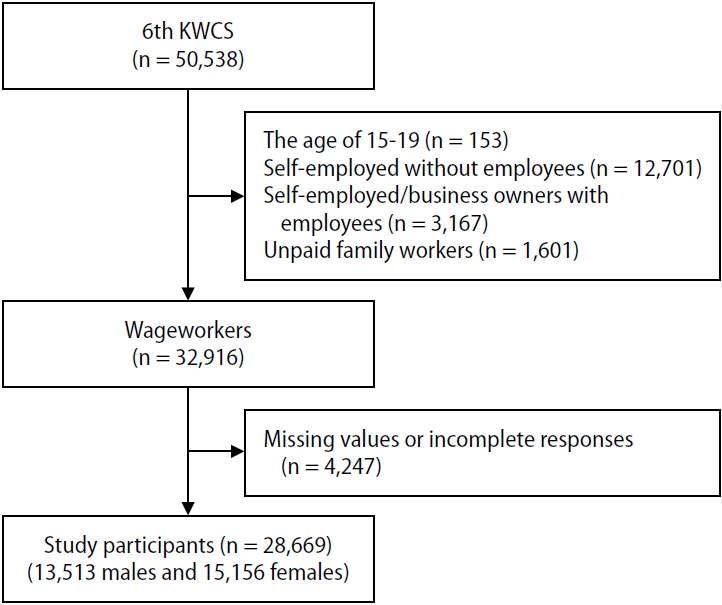
Fig. 1. Flow chart of the selection of study subjects. KWCS: Korean Working Conditions Survey.
Fig. 1.
Work-life balance and effort-reward imbalance, and their interaction, associated with presenteeism among Korean wage workers: Based on 6th Korean working conditions survey
| Variable | WLB | ERI | ||||||
|---|---|---|---|---|---|---|---|---|
| Total |
Balance | Imbalance | p-value |
Total |
Balance | Imbalance | p-value |
|
| Sex | 33,095 | <0.001 | 33,095 | <0.001 | ||||
| Men | 18,810 | 15,476 (82.3) | 3,334 (17.7) | 18,810 | 9,310 (49.5) | 9,500 (50.5) | ||
| Women | 14,285 | 12,252 (85.8) | 2,033 (14.2) | 14,285 | 6,792 (47.5) | 7,493 (52.5) | ||
| Age (years) | 0.066 | <0.001 | ||||||
| 20–39 | 4,221 | 3,523 (83.5) | 698 (16.5) | 4,221 | 1,806 (42.8) | 2,415 (57.2) | ||
| 40–49 | 7,361 | 6,148 (83.5) | 1,213 (16.5) | 7,361 | 3,626 (49.3) | 3,735 (50.7) | ||
| 50–59 | 8,321 | 7,033 (84.5) | 1,288 (15.5) | 8,321 | 4,185 (50.3) | 4,136 (49.7) | ||
| ≥60 | 13,192 | 11,024 (83.6) | 2,168 (16.4) | 13,192 | 6,485 (49.2) | 6,707 (50.8) | ||
| Self-rated health status | <0.001 | <0.001 | ||||||
| Bad | 32,006 | 27,025 (84.4) | 4,981 (15.6) | 32,006 | 15,809 (49.4) | 16,197 (50.6) | ||
| Good | 1,089 | 703 (64.5) | 386 (35.5) | 1,089 | 293 (26.9) | 796 (73.1) | ||
| Education | <0.001 | <0.001 | ||||||
| Middle school or below | 19,874 | 16,967 (85.4) | 2,907 (14.6) | 19,874 | 10,524 (53.0) | 9,350 (47.0) | ||
| High school | 10,755 | 8,743 (81.3) | 2,012 (18.7) | 10,755 | 4,664 (43.4) | 6,091 (56.6) | ||
| College or above | 2,467 | 2,019 (81.8) | 448 (18.2) | 2,467 | 916 (37.1) | 1,551 (62.9) | ||
| Income (10,000/month) | <0.001 | <0.001 | ||||||
| <100 | 13,387 | 11,273 (84.2) | 2,114 (15.8) | 13,388 | 7,819 (58.4) | 5,569 (41.6) | ||
| 100–199 | 10,835 | 8,745 (80.7) | 2,090 (19.3) | 10,834 | 4,825 (44.5) | 6,009 (55.5) | ||
| 200–299 | 6,635 | 5,640 (85.0) | 995 (15.0) | 6,635 | 2,504 (37.7) | 4,131 (62.3) | ||
| ≥300 | 2,238 | 2,070 (92.5) | 168 (7.5) | 2,238 | 954 (42.6) | 1,284 (57.4) | ||
| Occupational type | <0.001 | <0.001 | ||||||
| Management/professional | 4,890 | 3,913 (80.0) | 977 (20.0) | 4,890 | 1,907 (39.0) | 2,983 (61.0) | ||
| White collar | 3,725 | 2,946 (79.1) | 779 (20.9) | 3,725 | 1,523 (40.9) | 2,202 (59.1) | ||
| Service/sales | 5,759 | 4,685 (81.4) | 1,074 (18.6) | 5,758 | 2,680 (46.5) | 3,078 (53.5) | ||
| Blue collar | 7,546 | 6,627 (87.8) | 919 (12.2) | 7,546 | 4,101 (54.3) | 3,445 (45.7) | ||
| Laborer | 11,175 | 9,557 (85.5) | 1,618 (14.5) | 11,175 | 5,893 (52.7) | 5,282 (47.3) | ||
| Company size | <0.001 | <0.001 | ||||||
| <50 | 3,617 | 3,139 (86.8) | 478 (13.2) | 3,617 | 2,279 (63.0) | 1,338 (37.0) | ||
| 50–299 | 6,916 | 5,816 (84.1) | 1,100 (15.9) | 6,916 | 3,500 (50.6) | 3,416 (49.4) | ||
| ≥300 | 22,562 | 18,773 (83.2) | 3,789 (16.8) | 22,562 | 10,323 (45.8) | 12,239 (54.2) | ||
| Employment status | <0.001 | <0.001 | ||||||
| Regular worker | 1,657 | 1,293 (78.0) | 364 (22.0) | 1,657 | 588 (35.5) | 1,069 (64.5) | ||
| Temporary worker | 4,483 | 3,880 (86.5) | 603 (13.5) | 4,483 | 1,904 (42.5) | 2,579 (57.5) | ||
| Day laborer | 26,955 | 22,555 (83.7) | 4,400 (16.3) | 26,955 | 13,610 (50.5) | 13,345 (49.5) | ||
| Shiftwork | <0.001 | <0.001 | ||||||
| No | 3,311 | 2,483 (75.0) | 828 (25.0) | 3,311 | 1,516 (45.8) | 1,795 (54.2) | ||
| Yes | 29,784 | 25,245 (84.8) | 4,539 (15.2) | 29,784 | 14,586 (49.0) | 15,198 (51.0) | ||
| Night work | <0.001 | <0.001 | ||||||
| No | 3,080 | 2,031 (66.0) | 1,049 (34.0) | 3,080 | 1,344 (43.6) | 1,736 (56.4) | ||
| Yes | 30,015 | 25,697 (85.6) | 4,318 (14.4) | 30,015 | 14,758 (49.2) | 15,257 (50.8) | ||
| ≥10 working hours/day (/month) | <0.001 | <0.001 | ||||||
| 0 | 1,098 | 470 (42.8) | 628 (57.2) | 1,098 | 406 (37.0) | 692 (63.0) | ||
| 1–10 | 2,379 | 1,642 (69.0) | 737 (31.0) | 2,379 | 972 (40.9) | 1,407 (59.1) | ||
| ≥11 | 29,618 | 25,616 (86.5) | 4,002 (13.5) | 29,618 | 14,724 (49.7) | 14,894 (50.3) | ||
| Stress from work | <0.001 | <0.001 | ||||||
| No | 25,856 | 21,337 (82.5) | 4,519 (17.5) | 25,857 | 12,319 (47.6) | 13,538 (52.4) | ||
| Yes | 7,239 | 6,391 (88.3) | 848 (11.7) | 7,238 | 3,783 (52.3) | 3,455 (47.7) | ||
| Working hours (/week) | <0.001 | <0.001 | ||||||
| ≤40 | 9,375 | 6,478 (69.1) | 2,897 (30.9) | 9,375 | 4,116 (43.9) | 5,259 (56.1) | ||
| >40 | 23,720 | 21,250 (89.6) | 2,470 (10.4) | 23,720 | 11,986 (50.5) | 11,734 (49.5) | ||
| Presenteeism | <0.001 | <0.001 | ||||||
| No | 29,405 | 25,009 (85.1) | 4,396 (14.9) | 29,405 | 14,824 (50.4) | 14,582 (49.6) | ||
| Yes | 3,690 | 2,719 (73.7) | 971 (26.3) | 3,690 | 1,279 (34.7) | 2,411 (65.3) | ||
| WLB and ERI status | Total |
No presenteeism |
Presenteeism |
p-value |
|---|---|---|---|---|
| Men | 18,810 | 16,988 (90.3) | 1,822 (9.7) | <0.001 |
| Balanced-Balanced | 8,162 (43.4) | 7,640 (93.6) | 522 (6.4) | |
| Imbalanced-Balanced | 1,148 (6.1) | 1,047 (91.2) | 101 (8.8) | |
| Balanced-Imbalanced | 7,314 (38.9) | 6,571 (89.8) | 743 (10.2) | |
| Imbalanced-Imbalanced | 2,186 (11.6) | 1,731 (79.2) | 455 (20.8) | |
| Women | 14,285 | 12,417 (86.9) | 1,868 (13.1) | <0.001 |
| Balanced-Balanced | 6,011 (42.1) | 5,460 (90.8) | 551 (9.2) | |
| Imbalanced-Balanced | 782 (5.5) | 677 (86.6) | 105 (13.4) | |
| Balanced-Imbalanced | 6,241 (43.7) | 5,339 (85.5) | 902 (14.5) | |
| Imbalanced-Imbalanced | 1,251 (8.8) | 941 (75.2) | 310 (24.8) |
| Variable | Crude | Model 1 |
Model 2 |
|---|---|---|---|
| Men | |||
| WLB | |||
| Balanced | Ref. | Ref. | Ref. |
| Imbalanced | 2.25 (1.88–2.70) | 1.96 (1.63–2.34) | 1.41 (1.15–1.72) |
| ERI | |||
| Balanced | Ref. | Ref. | Ref. |
| Imbalanced | 2.01 (1.70–2.38) | 1.83 (1.55–2.17) | 1.72 (1.45–2.04) |
| Women | |||
| WLB | |||
| Balanced | Ref. | Ref. | Ref. |
| Imbalanced | 1.90 (1.62–2.24) | 1.73 (1.46–2.04) | 1.28 (1.07–1.54) |
| ERI | |||
| Balanced | Ref. | Ref. | Ref. |
| Imbalanced | 1.81 (1.56–2.09) | 1.72 (1.48–2.00) | 1.66 (1.43–1.93) |
| WLB and ERI status | Crude | Model 1 |
Model 2 |
|---|---|---|---|
| Men | |||
| Balanced-Balanced | Ref. | Ref. | Ref. |
| Imbalanced-Balanced | 1.42 (1.01–1.99) | 1.32 (0.93–1.86) | 1.00 (0.71–1.43) |
| Balanced-Imbalanced | 1.65 (1.36–2.01) | 1.56 (1.29–1.90) | 1.55 (1.28–1.90) |
| Imbalanced-Imbalanced | 3.85 (3.07–4.83) | 3.16 (2.52–3.97) | 2.27 (1.77–2.90) |
| Women | |||
| Balanced-Balanced | Ref. | Ref. | Ref. |
| Imbalanced-Balanced | 1.53 (1.14–2.06) | 1.37 (1.00–1.87) | 1.01 (0.73–1.41) |
| Balanced-Imbalanced | 1.67 (1.42–1.98) | 1.60 (1.35–1.89) | 1.57 (1.32–1.86) |
| Imbalanced-Imbalanced | 3.26 (2.66–4.00) | 2.88 (2.34–3.55) | 2.15 (1.71–2.69) |
| Crude | Model 1 |
Model 2 |
|
|---|---|---|---|
| Men | |||
| Multiplicative |
1.64 (1.10–2.46) | 1.54 (1.02–2.30) | 1.46 (0.96–2.20) |
| Additive |
1.78 (0.93–2.62) | 1.28 (0.56–1.99) | 0.71 (0.14–1.28) |
| Women | |||
| Multiplicative |
1.27 (0.89–1.82) | 1.32 (0.91–1.91) | 1.35 (0.92–1.99) |
| Additive |
1.06 (0.36–1.76) | 0.91 (0.27–1.56) | 0.57 (0.04–1.09) |
Table 1. General and occupational characteristics of the participants according to WLB and ERI
Values are presented as number (%). WLB: work-life balance; ERI: effort-reward imbalance. Weighted numbers of wageworkers;
Table 2. Presenteeism by WLB and ERI status
Values are presented as number (%). WLB: work-life balance; ERI: effort-reward imbalance. Weighted numbers of wageworkers;
Table 3. ORs of presenteeism according to WLB and ERI status by gender
Values are presented as OR (95% CI). OR: odds ratio; WLB: work-life balance; ERI: effort-reward imbalance; CI: confidence interval. Adjusted for age, and self-rated health status; Adjusted for age, self-rated health status, education, income, occupational type, company size, employment status, shiftwork, night work, working 10 hours or more per day (/month), stress from work, working hours (/week).
Table 4. ORs of presenteeism according to both WLB and ERI status
Values are presented as OR (95% CI). OR: odds ratio; WLB: work-life balance; ERI: effort-reward imbalance. Adjusted for age and self-rated health status; Adjusted for age, self-rated health status, education, income, occupational type, company size, employment status, shiftwork, night work, working 10 hours or more per day (/month), stress from work, working hours (/week).
Table 5. Interaction effect between WLB and ERI on presenteeism
WLB: work-life balance; ERI: effort-reward imbalance; OR: odds ratio; CI: confidence interval; RERI: relative excess risk due to interaction. Adjusted for age and self-rated health status; Adjusted for age, self-rated health status, education, income, occupational type, company size, employment status, shiftwork, night work, working 10 hours or more per day (/month), stress from work, working hours (/week); Values are presented as OR (95% CI); Values are presented as RERI (95% CI; calculated by delta method).


